Is earning interest on crypto worth it?

Feb 096 min read

When crypto prices are down, many holders choose not to sell. Instead, they wait, sometimes for months, hoping the market will recover.

That raises a natural question: if you’re holding anyway, does it make sense for your crypto to just sit there? Or is earning interest on crypto actually worth it during a downturn?

Let’s look at how crypto earnings work, why people use them while holding through volatile markets, and the trade-offs to consider before deciding.

What does it mean to earn interest on crypto?

Earning interest on crypto means putting your digital assets to work instead of leaving them idle in a digital wallet.

Rather than trading or selling, you deposit crypto on a platform that supports crypto earning. In return, you earn interest over time, often paid daily or weekly, while still owning your assets.

In simple terms:

  • You keep ownership of your crypto

  • Your balance grows over time

  • You don’t need to time the market

How earning interest on crypto works

Before earning interest, there’s one basic requirement: you need to be on a platform that offers crypto earning.

Once that’s in place, the process is straightforward.

Choose a platform that offers crypto earning

The first step is choosing one that allows you to earn on assets like Bitcoin, Ethereum, or stablecoins.

Add crypto to your account

You can either buy crypto directly on the platform or transfer assets you already own from another wallet.

Earn interest over time

Once your crypto is added, it usually starts earning interest automatically or within 24 hours. Depending on the platform and product, interest may be paid daily, weekly, or at the end of a fixed term.

Stay flexible or commit for longer

Some earning options let you withdraw or trade anytime, while others offer higher returns if you lock your assets for a set period.

Why do people earn interest on crypto during down markets?

Earning interest may become appealing when markets are volatile or trending lower.

Make holding feel productive

During downturns, holding can feel passive and frustrating. Earning interest gives long-term holders a way to build up their balance while waiting.

Offset volatility over time

Interest doesn’t eliminate price swings, but it can help smooth the experience by increasing the amount of crypto you hold — even when prices move sideways or down.

Avoid timing the market

Many holders prefer not to trade in uncertain conditions. Earning interest allows them to stay invested without constantly making buy-or-sell decisions.

Build a long-term habit

For some, earning interest is less about short-term returns and more about consistency — steadily growing holdings over months or years.

Flexible Savings vs. Fixed-term Savings

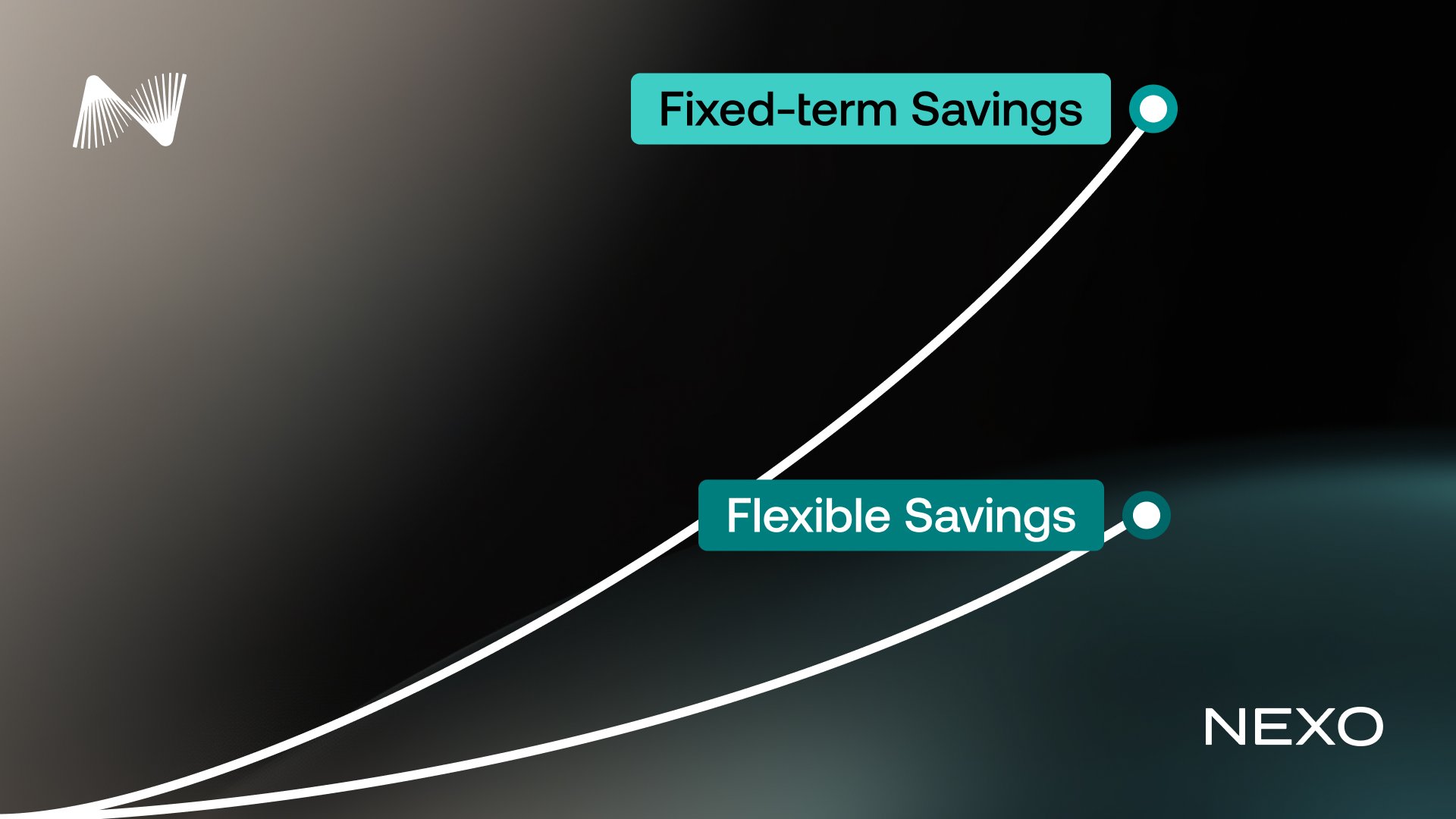
Earning interest on crypto isn’t one-size-fits-all. Platforms like Nexo offer two main ways to earn: Flexible Savings and Fixed-term Savings.

Each serves a slightly different purpose depending on how long you want to keep your assets tucked away and how much return you’re seeking.

Flexible Savings — earn while you stay flexible

With Flexible Savings, your crypto stays accessible. You can typically withdraw or move your assets at any time while they continue earning interest. Interest is credited daily and compounds over time.

  • Best for: holders who want easy access to their crypto
  • Access: withdraw or use funds at any time

Rate example on Nexo (may change or vary by geolocation):

  • Bitcoin (BTC): up to 5.5% annual interest

  • Ethereum (ETH): up to 6.5% annual interest

  • Stablecoins (e.g., USDC): up to 11% annual interest

Interest rates can vary based on your Loyalty Tier and how you choose to receive interest (e.g., in the same crypto asset or in NEXO Tokens).

Fixed-term Savings — higher interest rates for longer commitments

Fixed-term Savings means committing your crypto for a specific period — often 1, 3, 6, or 12 months in exchange for higher interest rates.

Because your assets are committed for a set duration, platforms like Nexo may offer higher yields above the base rate.

  • Best for: holders who don’t need immediate access and want higher rates
  • Access: your crypto is committed until the term ends

Rate example (may change or vary by geolocation):

  • Bitcoin (BTC): up to 6.5% annual interest
  • Ethereum (ETH): up to 7.5% annual interest
  • Stablecoins (e.g., USDC): up to 13% annual interest

Interest is typically paid at the end of the term, and exact rates depend on term length, Loyalty Tier, and how you choose to receive interest.

How to think about the choice

  • Flexible Savings gives you liquidity and control — your assets are earning while still available.

  • Fixed-term Savings offers higher potential returns in exchange for commitment — the trade-off is limited access until the term ends.

Some holders split their assets — keeping part in Flexible Savings for access and part in Fixed-term Savings for boosted interest rates.

Why this matters in a down market

When prices are uncertain or trending downward, some holders prefer to keep at least part of their holdings easily accessible — especially if they value agility. 

Flexible Savings supports that sense of control while still generating a return. Others who are confident in their long-term view and don’t expect to need access soon may use Fixed-term Savings to capture higher rates while they continue holding.

By understanding these two approaches, you can decide how earning interest fits with your broader holding strategy.

Frequently asked questions

Is earning interest still worth it when prices are falling?

It can be, especially for long-term holders who plan to keep their crypto through downturns. Earning interest may increase the amount of crypto you hold over time, even when prices are moving sideways or down. 

What’s the trade-off between Flexible Savings and Fixed-term Savings?

Flexible Savings prioritize access — you can usually withdraw anytime, but rates may be lower. Fixed-term Savings typically offer higher rates in exchange for commiting your assets for a set period. The trade-off is simple: more flexibility vs. potentially higher returns.

Can I lose my crypto if I use an earn product?

The core idea of earn products is to grow your holdings, not to trade. However, because your assets are held on a platform, there’s always provider-related risk (security, operations, and product terms). 

Are stablecoins safer to earn on than Bitcoin or Ethereum?

Stablecoins are designed to track a fiat currency (like the US dollar), so they generally don’t swing in price the way BTC or ETH can. But they have their own considerations, such as the stablecoin’s structure and issuer risks. 

Can I withdraw anytime if I’m earning interest?

It depends on the product. Flexible options are typically withdraw-anytime, while fixed-term options usually make funds commited until the term ends. This is why many holders keep an “accessible” portion in Flexible Savings and only commit what they won’t need soon to Fixed-term Savings.

These materials are for general information purposes only and are not intended as financial, legal, tax, or investment advice. Digital assets are subject to significant risk, including price volatility. The content of this article is intended solely for general informational and educational purposes. It does not constitute and should not be relied upon as financial, investment, legal, accounting, or tax advice, or as a recommendation to buy, sell, or hold any cryptocurrency or other financial instrument. Trading and investing in digital assets such as Bitcoin and other cryptocurrencies are inherently speculative and involve a substantial risk of loss. Always do your own research and consult a qualified professional before making any financial decisions.

All interest rates mentioned above are up to the stated percentages and may require meeting specific conditions, such as maintaining a certain Loyalty Tier or opting for specific interest payout options. Availability and terms vary by jurisdiction.