Markets Today - October 7, 2026
Oct 07•5 min read
.png)
Daily analysis of crypto markets and the forces shaping them, from the Nexo research desk.
Bitcoin eyes $87,000 as softer labor market pushes Fed hold odds above 80%
Bitcoin trades near $83,400 on Wednesday, down about 3% and at its lowest since October 2, as renewed Middle East tensions lifted oil above $101 a barrel and pushed the U.S. 30-year Treasury yield above 5.7%, a 24-year high. The total crypto market cap sits around $2.8 trillion. The S&P 500 and Nasdaq closed at records on Tuesday, with the S&P 500 up 0.6% to 7,820.85 and the Nasdaq Composite up 0.5% to 27,599.79, while the Dow rose 0.5% to 51,521.22, but futures point lower this morning, with the S&P 500 down 0.5% and the Nasdaq-100 and Dow down 0.8% each. Gold is lower near $4,126 and the dollar index is firmer near 102.2. Money markets price a pause in October and a hike in December, with roughly a 20% chance of an October increase and about 85% for December. The Fed's minutes today are the next test.
Bitcoin
Bitcoin slipped below $84,000 early Wednesday as intensified Middle East tensions lifted Brent above $101 a barrel, Treasury yields and the dollar. About $547 million of leveraged positions were reset over 24 hours, per CoinGlass, well above the prior day and including $174 million in Ether. Demand from U.S. spot ETFs had held up going into the drop, with $119 million of inflows on Tuesday, per SoSoValue. Crypto-linked shares such as Coinbase and Robinhood slipped about 2% in premarket trading.
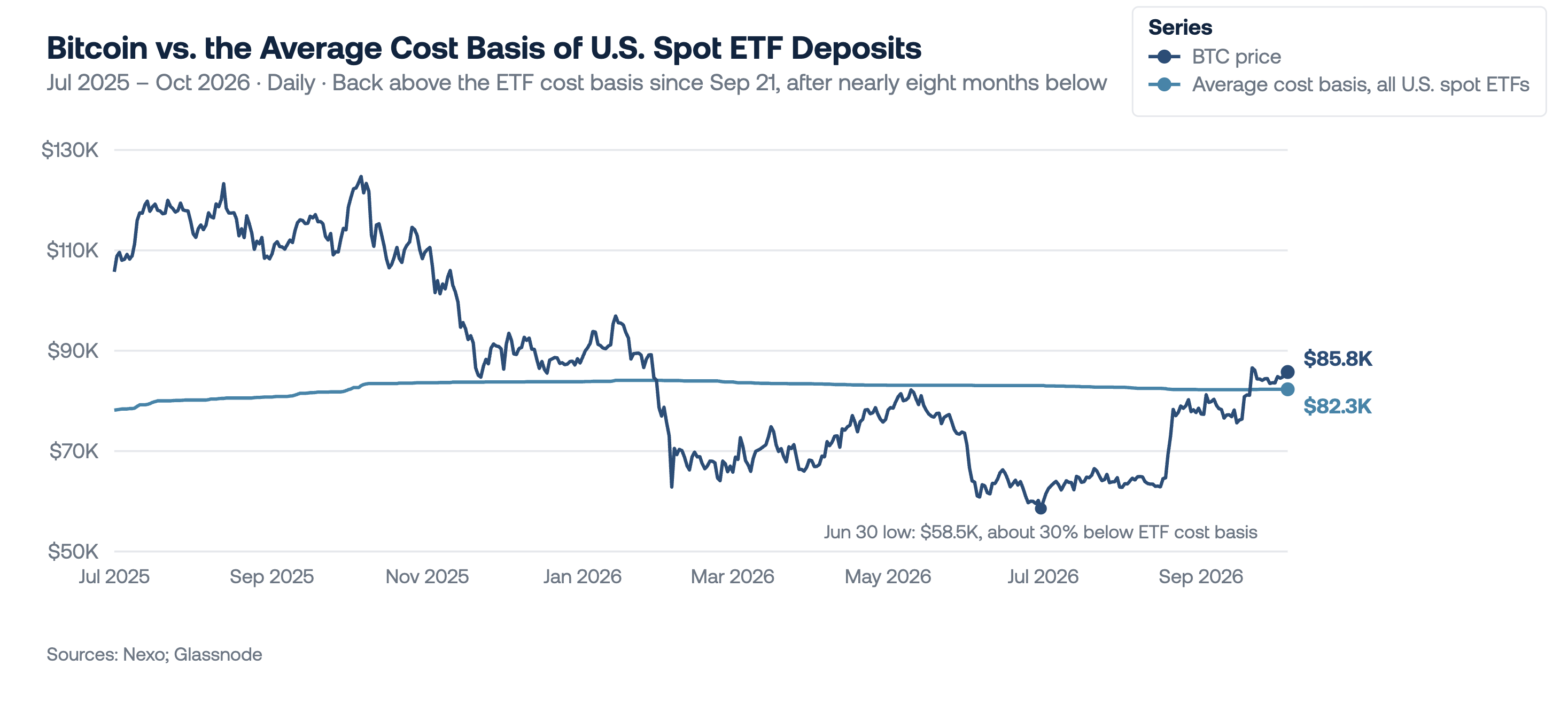
On-chain data from checkonchain maps where the next tests sit. Only one yearly buyer cohort remains underwater: those who bought in 2025, at an average cost near $88,000. That may now be forming resistance as recent buyers look to sell at breakeven, and September's high of $87,500 stalled just below it. Below spot, two independent cost bases cluster about 1.5% under price. The 2024 cohort's, near $82,100, capped the May rally before a fall to $60,000 and was reclaimed in August. The average cost of deposits into the U.S. spot ETFs, near $82,300, returned the funds' holders to profit only recently for the first time this year. Further down sit the 2026 cohort near $73,500, largely in profit since late August, and the 2023 cohort near $65,000, the recurring floor of the bear market. With a possible ceiling near $88,000 and a cushion near $82,000, oil and yields are choosing which way Bitcoin moves between them.
Ethereum & Altcoins
Ether trades near $2,565, falling harder than Bitcoin. Losses grew with distance from Bitcoin: smaller tokens fell more than the majors, with DeFi tokens and memecoins hit hardest, while XRP, Solana and BNB slipped. The pattern fits a macro-driven move rather than anything token-specific.
Ether's price is following oil and yields this week, but its roadmap is on its own clock. Ethereum's Glamsterdam upgrade went live on the Sepolia test network on Tuesday, one of the final major rehearsals before mainnet activation. The Ethereum Foundation has described it as an advance in the network's layer-1 scaling roadmap, with proposer-builder separation built into the protocol, block-level access lists and gas pricing that better reflects the cost of execution. It is arguably one of the year's most consequential upgrades.
Macro & Institutional
Tuesday's records were the S&P 500's first record close since mid-August, and it settled above 7,800 for the first time ever. The index has gained every trading day of October so far, a run that began after Friday's softer jobs report led investors to scale back bets on imminent Fed tightening, helped by AI enthusiasm and muted oil, which let markets shake off the Treasury selloff. That run is being tested today as yields resume their upward march and oil ticks up. The records are also narrow: the Dow is still about 5% below its August record, the equal-weighted S&P 500 more than 5% below its peak and the Russell 2000 more than 8% below its high, with AI megacaps carrying the cap-weighted indices.
The global bond selloff resumed. The U.S. 30-year yield touched 5.7041% and the 10-year rose to about 5.33%, as investors demanded more compensation to absorb a heavy supply of sovereign debt. Tuesday's $39 billion 3-year auction went smoothly but cleared at the highest yields in 20 years. AI is a borrowing story as much as a spending story: SpaceX is reportedly seeking $40 billion of debt to buy Nvidia chips, a reminder that the build-out competes with governments for capital.
French yields resumed their climb after Tuesday's brief respite, with the 10-year at 4.82% against Bunds near 3.50%. The election poll leader's plan to cut the deficit to 3% of GDP by 2030 offered only a short reprieve, as investors doubt it can pass with the 2026 deficit at 5.4%. The euro trades near a 17-month low against the dollar and a 16-month low against sterling.
Brent trades above $101 as tensions around the Strait of Hormuz and the Bab el-Mandeb Strait persist. Gold slipped on the stronger dollar, though central banks bought 39 tonnes in August and 170 tonnes this year. India's central bank raised rates to 5.50%, its first hike since 2023, and signaled more tightening is possible, yet the rupee hit a record low near 96.8 per dollar because the move was already priced in.
Looking Ahead
The lead event is today's release of the Fed's September minutes, which should show how firmly officials back the December hike markets price at about 85%, and how much support there is for skipping October. The 10-year Treasury note auction follows later today, with Fed officials Waller, Kashkari and Musalem also due to speak. The 30-year bond auction comes Thursday, along with the ECB's account of its latest meeting and weekly jobless claims. Earnings season opens next week with the big banks, and analysts expect S&P 500 profit growth of about 30%, led by energy and tech, down from 54% in the second quarter. For Bitcoin, oil and yields are the swing factors, and the nearest on-chain test is the $82,000 to $82,300 cost-basis zone below. If the auction and minutes calm bond volatility, the pressure should ease, and if they do not, it will persist.
Author: Iliya Kalchev, Analyst at Nexo’s Dispatch
This material is produced by Nexo for informational purposes only and does not constitute financial, investment, legal, or tax advice, or a recommendation to transact in any digital asset. Views are the author's as of the date of publication and may change without notice. Information is from sources believed reliable, but Nexo makes no warranty as to its accuracy and accepts no liability for any loss arising from reliance on this material.