¿Realmente necesitas una billetera fría? Una guía práctica
May 11•10 min read
La versión corta
Una billetera fría es un dispositivo de almacenamiento de cripto que mantiene tus claves privadas completamente fuera de línea, haciéndolas inalcanzables para los atacantes en línea. A menudo se las describe como la forma más segura de mantener criptomonedas, y para algunas personas, realmente lo son.
Pero las billeteras frías también introducen sus propios riesgos: pérdida de frases de recuperación, vulnerabilidades en la cadena de suministro, problemas de herencia y la presión constante de ser tu propio equipo de seguridad. Para la mayoría de los holders de cripto cotidianos, la respuesta honesta a "¿necesito una billetera fría?" depende de cuánto mantienes, con qué frecuencia operas y cuánta confianza tienes para gestionar la seguridad por ti mismo.
Esta guía te explica la decisión en un lenguaje sencillo para que puedas decidir si una billetera fría, una billetera caliente o un custodio regulado es realmente lo adecuado para ti.
¿Qué es una billetera fría?
Una billetera fría es cualquier billetera de cripto que almacena tus claves privadas completamente fuera de línea. Debido a que las claves nunca entran en contacto con un dispositivo conectado a internet, los atacantes en línea (hackers, malware, sitios de phishing) no pueden acceder a ellas de forma remota.
El término "fría" es lo opuesto a "caliente". Las billeteras calientes están conectadas a internet (tu teléfono, una extensión de navegador, una app de un exchange). Son convenientes para el uso activo, pero están expuestas a amenazas en línea. Las billeteras frías sacrifican la comodidad por el aislamiento.
Los tres formatos más comunes son:
- Billeteras de hardware : pequeños dispositivos físicos, generalmente con forma de USB, que mantienen tus claves en un chip seguro. Las conectas a una computadora solo cuando quieres firmar una transacción, y luego las desconectas
- Billeteras de papel: tu clave privada o frase de recuperación impresa (o escrita a mano) en papel físico, guardada en un lugar seguro
- Computadoras con air-gap: una máquina dedicada que nunca se conecta a internet, utilizada solo para firmar transacciones
Las billeteras de hardware son, con diferencia, el formato más popular hoy en día porque equilibran la seguridad con la usabilidad. Las configuraciones de papel y con air-gap suelen ser utilizadas por holders experimentados o instituciones que almacenan grandes montos a largo plazo.
Billetera fría vs. billetera caliente: la verdadera diferencia
La cuestión de la conexión a internet es la principal diferencia, pero las desventajas van más allá.
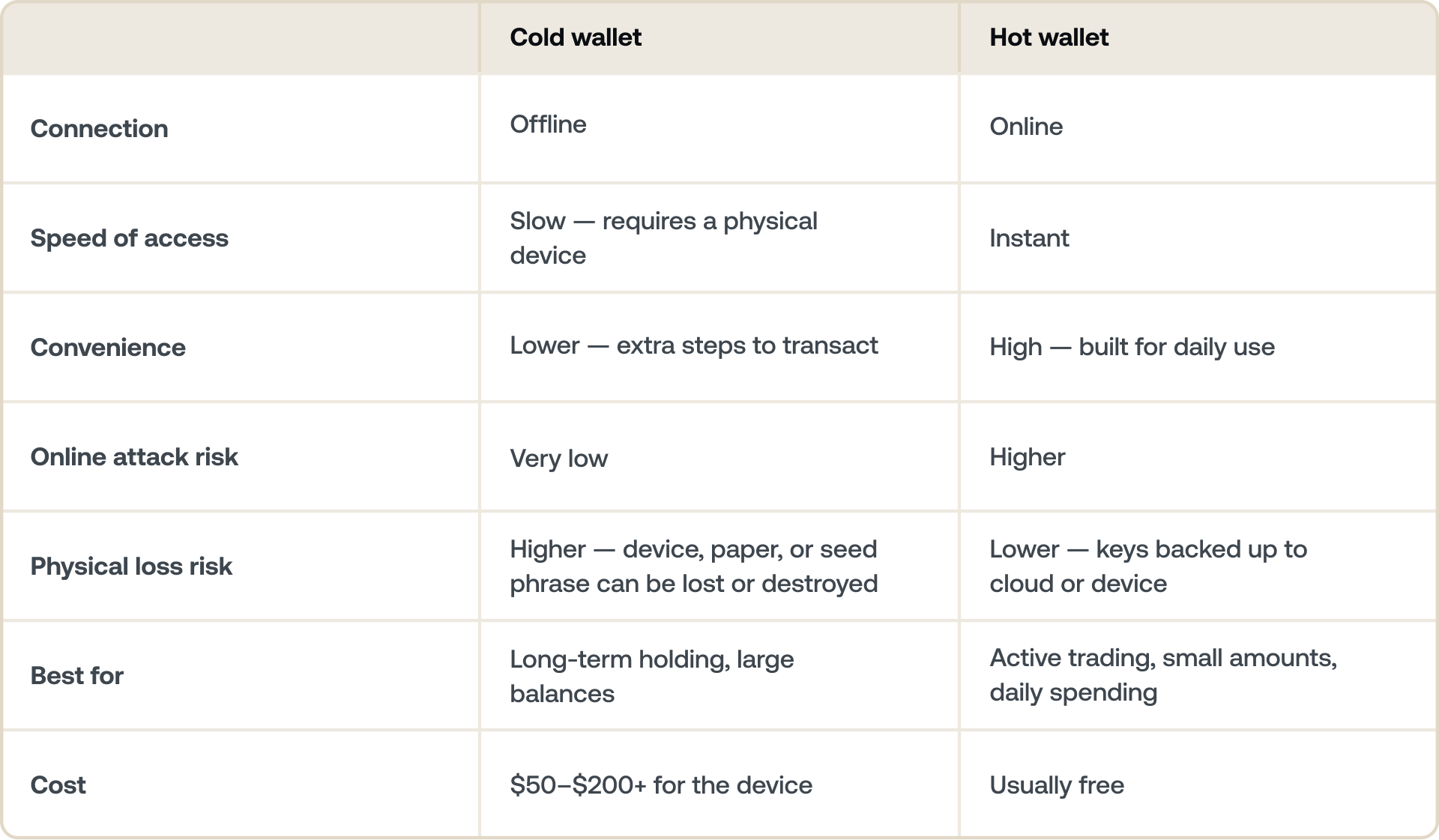
La mayoría de los holders de cripto con experiencia usan ambas: una billetera caliente para el monto con el que operan activamente o gastan, y una billetera fría para el saldo más grande que quieren mantener a largo plazo. El error no es elegir la incorrecta; es usar un tipo para ambas tareas.
Los argumentos honestos a favor de una billetera fría
Cuando las billeteras frías funcionan bien, funcionan muy bien. Las razones más fuertes para usar una:
Mantienes un monto significativo a largo plazo. Si tus criptomonedas valen más que el costo de un hackeo sin un dolor financiero grave, eliminarlas de los sistemas conectados a internet elimina toda una clase de riesgo.
No operas con frecuencia. Las billeteras frías recompensan la inactividad. Si vas a mantener tu saldo durante meses o años, la inconveniencia de conectar un dispositivo unas pocas veces al año es un precio bajo por la seguridad.
Quieres una verdadera autocustodia. Ningún exchange, custodio o tercero puede congelar, perder o hackear tus fondos en tu nombre. Las claves son solo tuyas. Para muchas personas, esa independencia es el objetivo principal de las criptomonedas.
Desconfías de las plataformas centralizadas. Ya sea por riesgo regulatorio, riesgo de contraparte o por principios filosóficos, algunos holders simplemente no quieren que sus criptomonedas estén en el servidor de nadie más.
Si los cuatro puntos te describen, una billetera fría es probablemente la opción correcta, y el resto de esta guía es en gran parte una confirmación.
Los argumentos honestos en contra de una billetera fría
Las billeteras frías tienen desventajas reales que importan, especialmente para las personas que no tienen experiencia en seguridad.
Te conviertes en tu propio equipo de seguridad. No hay línea de soporte, ni restablecimiento de contraseña, ni recuperación por fraude. Si pierdes tu frase de recuperación, tus criptomonedas se pierden. Si alguien roba tu dispositivo y tu PIN, tus criptomonedas se pierden. La responsabilidad recae en ti, permanentemente.
La pérdida de frases de recuperación es común. Las estimaciones de la industria sugieren que una parte significativa de todos los Bitcoin minados hasta ahora es inaccesible, gran parte de ella se encuentra en almacenamiento en frío cuyos propietarios perdieron la frase de recuperación, murieron sin compartirla o la almacenaron en algún lugar que ya no recuerdan. No hay proceso de recuperación: las monedas son simplemente inalcanzables.
El hardware puede fallar o ser manipulado. Los dispositivos se rompen. Los fabricantes quiebran. Han ocurrido ataques a la cadena de suministro (donde los dispositivos son interceptados entre la fábrica y el comprador y modificados). Ninguno de estos riesgos es enorme, pero existen, y no existen cuando un custodio regulado mantiene tus activos.
La herencia es realmente difícil. Si algo te sucede, ¿puede tu familia acceder a tus criptomonedas? La mayoría de las personas guardan su frase de recuperación de una manera que es segura contra el robo, pero imposible de usar para un cónyuge, hijo o albacea sin conocimientos técnicos. La planificación patrimonial para el almacenamiento en frío es una habilidad en sí misma.
El costo de la comodidad es real.Cada transacción significa localizar físicamente el dispositivo, conectarlo, firmar, desconectarlo y volver a guardarlo. Si quieres usar tus criptomonedas (generar rendimiento con ellas, pedir un préstamo con ellas como garantía, hacer un swap, o pagar con ellas), el almacenamiento en frío te lo dificulta.
Aún puedes perder dinero por tus propios errores. Enviar criptomonedas a la dirección equivocada, caer en un sitio de phishing que imita el software de tu billetera, aprobar un contrato inteligente malicioso: nada de esto se detiene con el almacenamiento en frío. Las claves están seguras; tu juicio también debe estarlo.
La cuestión no es que las billeteras frías sean malas. Es que la ganancia en seguridad solo importa si supera estos costos para tu situación.
El marco para la toma de decisiones: ¿Deberías conseguir una?
Cinco preguntas para aclarar el panorama.
1. ¿Cuántas criptomonedas mantienes realmente?
Sé honesto contigo mismo. Si tu saldo total es inferior a unos cientos de dólares, el costo de una billetera de hardware más la fricción de usarla probablemente supera el beneficio marginal de seguridad. Un custodio de buena reputación o una billetera caliente razonablemente segura está bien a este nivel.
Una vez que tienes miles o decenas de miles de dólares, el cálculo cambia. El monto que perderías en el peor de los casos se vuelve lo suficientemente grande como para que pagar $80 por un dispositivo comience a parecer un seguro barato.
2. ¿Qué tan activo es tu trading?
Una billetera fría guardada en un cajón es segura. Una billetera fría que conectas constantemente para mover fondos está expuesta a la mayoría de los mismos riesgos que una billetera caliente, además del riesgo de pérdida del dispositivo. Si operas semanalmente, haces swaps entre activos con frecuencia o usas protocolos DeFi con regularidad, el almacenamiento en frío no se ajusta a tu comportamiento, y tratar de forzarlo generalmente significa que terminarás usándolo con pereza, lo que anula el propósito.
3. ¿Tienes confianza para gestionar tu propia seguridad?
La autocustodia no es solo comprar el dispositivo. Es:
- Generar y registrar la frase de recuperación de forma segura
- Almacenar la frase de recuperación en un lugar a salvo de robos, incendios, agua y de ser vista
- Mantener ese almacenamiento durante años o décadas
- Saber cómo verificar el firmware, identificar el phishing y evitar la ingeniería social
- Planificar lo que sucede si pierdes el dispositivo, la frase de recuperación o tu capacidad para acceder a cualquiera de ellos
Si algo de eso te parece realmente difícil o algo que pospondrías, la respuesta honesta es que la billetera fría podría terminar siendo menos segura que un custodio bien gestionado, porque el modo de fallo (perder las claves tú mismo) se vuelve más probable que el modo de fallo contra el que protege (que el custodio sea hackeado).
4. ¿Necesitas que tus criptomonedas estén trabajando activamente?
Si quieres que tu saldo genere rendimiento, sirva como garantía para un préstamo o esté disponible para gastar a través de una tarjeta o una app, el almacenamiento en frío los deja fuera de tu alcance. Tendrías que transferir de un lado a otro, lo que agrega comisiones, tiempo y exposición cada vez que mueves fondos.
5. ¿Has planeado qué sucederá si ya no estás?
Esta es la pregunta en la que a nadie le gusta pensar. Si mueres, quedas incapacitado o simplemente olvidas dónde pusiste la frase de recuperación en cinco años, ¿tus criptomonedas llegarán a las personas que quieres? La mayoría de la gente responde "no" honestamente, y la mayoría no lo soluciona. Si vas a mantener un valor significativo en almacenamiento en frío, la planificación patrimonial no es opcional.
Si no puedes responder con confianza "sí" a la mayoría de estas preguntas, no es un fracaso, es información útil. La realidad honesta es que para la mayoría de los holders de cripto casuales o moderados, un custodio regulado es genuinamente una opción más práctica que el almacenamiento en frío. No porque las billeteras frías sean malas, sino porque el modelo de seguridad de "solo tú eres responsable de todo, para siempre" solo brinda seguridad cuando realmente tienes el tiempo, la experiencia y la disciplina para ejecutarlo.
La tercera opción que la mayoría de la gente ignora
La conversación sobre las billeteras frías generalmente se enmarca como una elección de dos vías: billetera caliente (riesgosa) o billetera fría (segura). Pero hay una tercera opción que se adapta a muchas personas mejor que cualquiera de las dos: una plataforma de custodia regulada.
Un custodio mantiene tus criptomonedas en tu nombre, como un banco mantiene tus dólares. El modelo de seguridad es fundamentalmente diferente de la autocustodia:
- La plataforma se encarga de la gestión de claves, la seguridad de la infraestructura y el riesgo operativo
- Los custodios regulados están sujetos a auditorías, seguros, requisitos de capital y supervisión legal
- Conservas el acceso a través de la recuperación de cuenta estándar, sin frases de recuperación perdidas permanentemente
Esta tampoco es una elección de una u otra. Muchos holders dividen sus criptomonedas: una porción en almacenamiento en frío para la parte que están seguros de que no tocarán, y el resto en una plataforma de custodia donde realmente puede trabajar para ellos.
Cómo decidir: un resumen práctico
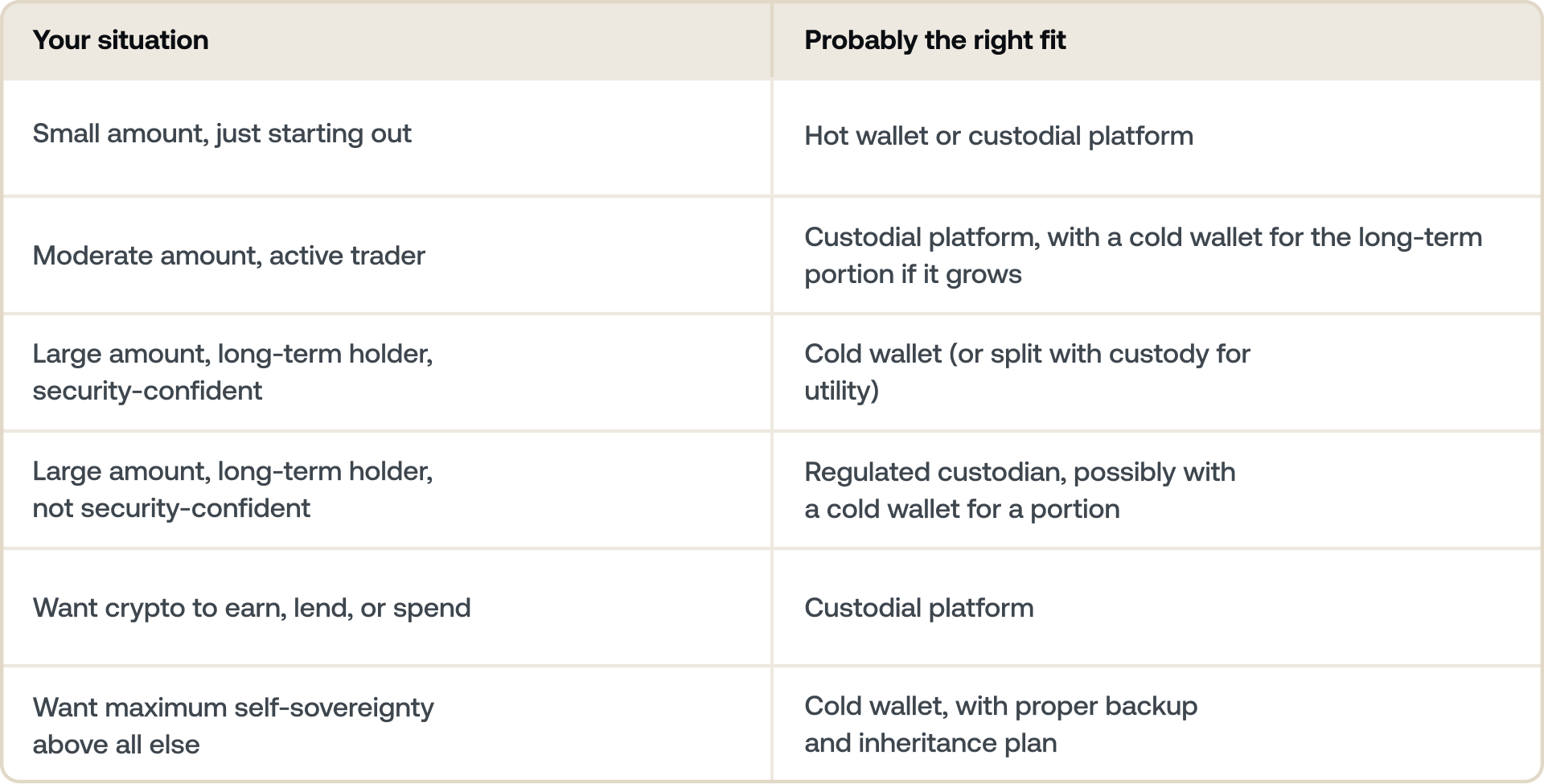
No hay una respuesta universalmente correcta. La estrategia de almacenamiento correcta es la que coincida con la forma en que realmente te comportas con tus criptomonedas, no la que suena más segura sobre el papel.
Preguntas frecuentes
1. ¿Son las billeteras frías realmente a prueba de hackeos?
Son muy resistentes a los ataques remotos en línea porque las claves nunca entran en contacto con un dispositivo conectado a internet. No son inmunes al robo físico, la manipulación de la cadena de suministro, la ingeniería social o el error de la persona usuaria. Decir que son "a prueba de hackeos" es una exageración.
2. ¿Qué pasa si pierdo mi billetera fría?
El dispositivo en sí no importa: tus criptomonedas no se almacenan en él, solo las claves. Si tienes una copia de seguridad de tu frase de recuperación, puedes restaurar el acceso a tus fondos en un nuevo dispositivo. Si pierdes tanto el dispositivo como la frase de recuperación, tus criptomonedas serán inaccesibles para siempre.
3. ¿Puedo mantener algunas criptomonedas con un custodio y otras en almacenamiento en frío?
Sí, y muchos holders lo hacen. Este suele ser el enfoque más práctico: mantener el monto que quieres tener activo (para trading, ganar o gastar) en una plataforma de custodia, y mover una porción para mantener a largo plazo a un almacenamiento en frío.
4. ¿Necesito una billetera fría para pequeños montos de criptomonedas?
Probablemente no. El costo del dispositivo, más la fricción de usarlo, generalmente supera el beneficio marginal de seguridad para saldos pequeños. Una billetera caliente o un custodio de buena reputación generalmente están bien a este nivel.
5. ¿En qué se diferencia el almacenamiento en frío del almacenamiento en frío de una plataforma de custodia?
Una plataforma de custodia suele mantener la mayoría de los fondos de los clientes en almacenamiento en frío como parte de su seguridad operativa. La diferencia es quién gestiona las claves: tú (autocustodia) o la plataforma (custodia). Para la mayoría de las personas, el nivel de seguridad práctico es similar; lo que difiere es quién asume la responsabilidad y el riesgo.
Estos materiales son accesibles a nivel mundial, y la disponibilidad de esta información no constituye el acceso a los servicios descritos, los cuales pueden no estar disponibles en ciertas jurisdicciones. Estos materiales son solo para fines de información general y no pretenden ser un asesoramiento financiero, legal, fiscal o de inversión, ni una oferta, solicitud, recomendación o respaldo para usar cualquiera de los Servicios de Nexo, y no son personalizados ni están adaptados de ninguna manera para reflejar objetivos de inversión, situación financiera o necesidades particulares. Las criptomonedas están sujetas a un alto grado de riesgo, que incluye, entre otros, la dinámica volátil de los precios del mercado, los cambios regulatorios y los avances tecnológicos. El rendimiento pasado de los activos digitales no es un indicador confiable de resultados futuros. Las criptomonedas no son dinero ni moneda de curso legal, no están respaldadas por el gobierno ni por un banco central, y la mayoría no tiene ningún activo subyacente, flujo de ingresos u otra fuente de valor. Se debe ejercer un juicio independiente basado en las circunstancias personales, y se recomienda la consulta con un profesional cualificado antes de tomar cualquier decisión.