Що насправді можна робити з Ethereum у 2026 році?
Feb 27•5 min read
Питання, яке врешті-решт ставить собі кожен власник ETH
Ви чули про Ethereum. Можливо, ви ним володієте. Але коли хтось запитує, що він насправді робить, відповідь зазвичай виходить розпливчастою — щось про смартконтракти, щось про DeFi — і на цьому все.
Bitcoin має просту історію: цифровий Gold, фіксований обсяг пропозиції, засіб заощадження. Історію Ethereum складніше узагальнити, оскільки він робить більше речей одночасно.
У цій статті розглядається, що таке Ethereum насправді, для чого його використовують сьогодні та як він вписується в загальну картину створення капіталу за допомогою цифрових активів.
Ethereum — це не просто криптовалюта
Ether (ETH) — це нативний токен Ethereum, але сам Ethereum — це мережа. Уявіть собі глобальний комп'ютер, на якому будь-хто може створювати, програмувати та використовувати програми, не потребуючи дозволу від компанії чи уряду.
Від Bitcoin його відрізняє можливість програмування. Bitcoin винятково добре робить одну річ: переміщує цінність від однієї людини до іншої. Ethereum теж це може, але він також може виконувати код. Цей код, який називається смартконтрактами, виконується автоматично за певних умов, без жодного посередника.
Саме ця єдина можливість — програмовані угоди, що самостійно виконуються, — робить Ethereum основою для майже всього цікавого, що відбувається в криптосвіті зараз.
Що насправді можна робити з Ethereum?
Миттєво переказуйте гроші будь-куди
Найпростіший варіант використання. Ви можете переказати ETH будь-кому у світі за лічені хвилини, у будь-який час, без банківського рахунку, банківського переказу чи кореспондентської банківської системи. Жодних робочих годин. Жодного триденного вікна для розрахунків.
Для людей у країнах із нестабільною валютою або обмеженою банківською інфраструктурою вже одне це є революційним.
Доступ до децентралізованих фінансів (DeFi)
DeFi — це загальна назва фінансових сервісів, які працюють на Ethereum без контролю з боку централізованої установи. Кредитування, позики, торгівля, отримання дохідності — усе це доступно кожному, хто має підключення до Інтернету, 24 години на добу.
У лютому 2026 року Ethereum Foundation підтвердив свою прихильність DeFi, описавши його як «стейблкоїни, які може утримувати кожен, дохідність без приватного банкіра, ринки, які ніколи не закриваються і не можуть вас виключити». Це бачення, а інфраструктура для його підтримки вже працює.
Популярні протоколи DeFi, як-от Aave, Compound та Uniswap, разом керують активами на мільярди доларів — і всі вони побудовані на Ethereum.
Використовуйте та утримуйте стейблкоїни
Більшість основних світових стейблкоїнів, включно з USDC та USDT, працюють як токени в мережі Ethereum. Коли ви утримуєте $1 в USDC, цей долар знаходиться на блокчейні Ethereum.
Це важливо, оскільки стейблкоїни стають серйозною фінансовою інфраструктурою. Повідомляється, що у другій половині 2026 року Meta інтегрує платежі стейблкоїнами у Facebook, Instagram та WhatsApp. Visa вже обробляє розрахунки в USDC через інфраструктуру на базі Ethereum. Цифровий долар переважно працює на рейках Ethereum.
Здійснюйте стейкінг ETH і отримуйте винагороди
З того часу, як у 2022 році Ethereum перейшов із Proof-of-Work на Proof-of-Stake, власники ETH можуть здійснювати стейкінг своїх токенів, щоб допомагати валідувати мережу й отримувати за це винагороди. Понад 30% усіх ETH зараз у стейкінгу, що робить її однією з найбільших екосистем стейкінгу в криптосвіті.
Стейкінг з часом приносить вам нові ETH — дохідність, яку виплачує сама мережа за участь у забезпеченні її безпеки.
Володійте та торгуйте цифровими активами (NFT)
NFT (невзаємозамінні токени) — це унікальні цифрові активи, записані на Ethereum, які підтверджують право власності та автентичність. Вони починалися з цифрового мистецтва, але розширилися на музичні роялті, квитки на заходи, ігрові предмети та токенізацію реальних активів.
Кожен NFT створюється за допомогою смартконтракту на Ethereum, а право власності публічно перевіряється в ончейн.
Забезпечення роботи ШІ-агентів і наступної економіки
Ось куди рухається Ethereum у 2026 році. ШІ-агентам — автономному програмному забезпеченню, яке може виконувати завдання, здійснювати транзакції та керувати портфелями без втручання людини — для роботи потрібна нативна валюта. Ethereum та його екосистема стейблкоїнів стають цим валютним рівнем.
Ethereum проти Bitcoin: різні інструменти, різні завдання
Поширене питання — чи варто обирати щось одне. Корисніше зрозуміти, що робить кожен із них.
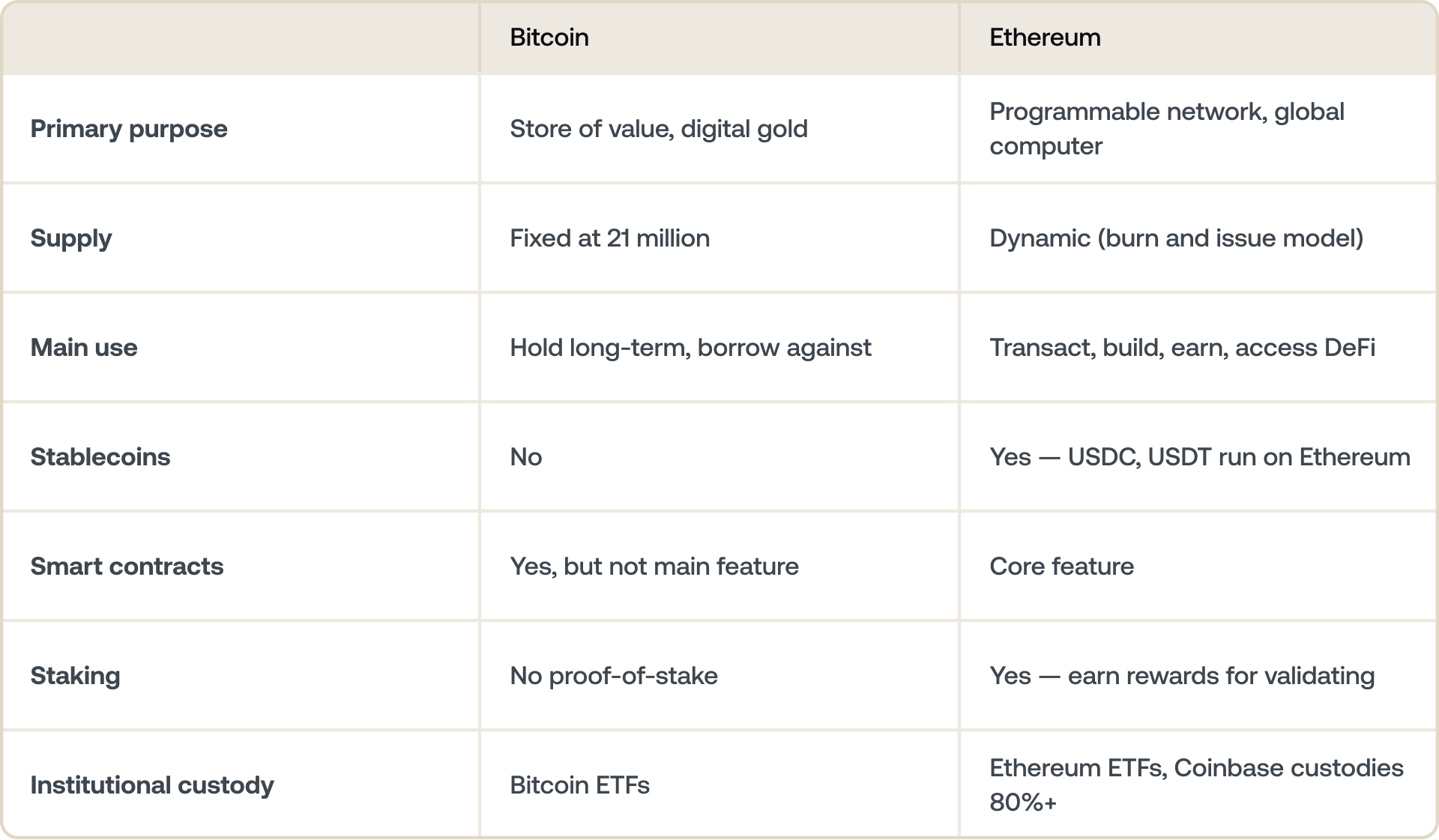
Жоден не замінює іншого. Багато інвесторів утримують Bitcoin як довгостроковий резерв, а Ethereum — як активний, продуктивний шар свого портфеля.
Що власники Ethereum можуть робити на Nexo
Ethereum — це не просто те, що треба утримувати і чекати. Якщо утримувати його на такій платформі, як Nexo, він може працювати на вас.
- Заробляйте відсотки на свої ETH через продукти Flexible та Fixed-term Savings — щоб ваші активи зростали, навіть коли на ринку затишшя.
- Позичайте під заставу своїх ETH через Nexo Credit Line, отримуючи доступ до готівки або стейблкоїнів, не продаючи свою позицію.
- Купуйте та обмінюйте ETH разом із понад 100 іншими активами, 24/7, без необхідності переміщувати кошти між платформами.
Та сама логіка, яка робить Ethereum найкориснішою програмованою мережею в криптосвіті, стосується і того, як ви його утримуєте: активи, що простоюють, — це втрачена можливість.
Поширені запитання
1. Для чого використовується Ethereum?
Ethereum використовується для глобальних грошових переказів, роботи децентралізованих фінансових (DeFi) застосунків, розміщення стейблкоїнів, як-от USDC та USDT, мінтингу й торгівлі NFT, стейкінгу для отримання винагород, а також все частіше як інфраструктурний рівень для ШІ-агентів і токенізованих реальних активів.
2. У чому різниця між Ethereum і Bitcoin?
Bitcoin — це насамперед засіб заощадження з фіксованим обсягом пропозиції — цифровий Gold. Ethereum — це програмована мережа, де розробники можуть створювати застосунки. Bitcoin добре робить одну річ. Ethereum робить багато речей за допомогою смартконтрактів.
3. Для чого саме використовується ETH?
ETH — це нативний токен Ethereum. Ви використовуєте його для сплати комісій за транзакції в мережі (так званих комісій за газ), для стейкінгу, щоб отримувати винагороди, і для взаємодії з протоколами DeFi. Його також утримують як інвестицію та використовують як забезпечення для позик на таких платформах, як Nexo.
4. Чи є Ethereum хорошою довгостроковою інвестицією?
Ethereum має зростаючу екосистему, велику та активну спільноту розробників, а також зростаюче інституційне визнання — Coinbase зберігає понад 80% американських ETF-активів Bitcoin та Ethereum. Як і всі цифрові активи, він пов'язаний зі значним ризиком і волатильністю. Це не є фінансовою порадою; рекомендується приймати незалежні рішення та звертатися за професійною консультацією.
5. Що таке смартконтракти?
Смартконтракти — це програми, розгорнуті на Ethereum, які виконуються автоматично за певних умов — без участі банку, юриста чи іншого посередника. Вони забезпечують роботу протоколів DeFi, маркетплейсів NFT, стейблкоїнів і більшості того, що робить Ethereum корисним.
6. Чи можна отримувати відсотки на Ethereum?
Так. Платформи, як-от Nexo, пропонують щоденні відсотки на активи в ETH через продукти Flexible і Fixed-term Savings. Ставки залежать від активу, рівня лояльності та юрисдикції.
7. Що таке стейкінг Ethereum?
Стейкінг означає блокування ETH для допомоги у валідації транзакцій у мережі Ethereum. Натомість стейкери отримують щойно випущені ETH як винагороду. Понад 30% усіх ETH наразі перебувають у стейкінгу, що зменшує обсяг ліквідної пропозиції на біржах.
Ці матеріали доступні в усьому світі, і наявність цієї інформації не означає доступу до описаних послуг, які можуть бути недоступні в певних юрисдикціях. Ці матеріали призначені лише для загальноінформаційних цілей і не є фінансовою, юридичною, податковою чи інвестиційною порадою, пропозицією, закликом, рекомендацією чи схваленням для використання будь-яких послуг Nexo, а також не є персоналізованими та жодним чином не пристосовані для відображення конкретних інвестиційних цілей, фінансової ситуації чи потреб. Цифрові активи схильні до високого ступеня ризику, включно з, але не обмежуючись, нестабільною динамікою ринкових цін, регуляторними змінами та технологічним прогресом. Минулі показники ефективності цифрових активів не є надійним індикатором майбутніх результатів. Цифрові активи не є грошима або законним платіжним засобом, не підтримуються урядом чи центральним банком, і більшість із них не мають жодних базових активів, потоку доходів чи іншого джерела вартості. Необхідно виносити незалежне судження на основі особистих обставин, і перед ухваленням будь-якого рішення рекомендується проконсультуватися з кваліфікованим фахівцем.