Bitcoin және Gold: сізге біреуі ме, екіншісі ме, әлде екеуі де керек пе?
Feb 26•5 min read
Bitcoin де, Gold та, кем дегенде, ішінара адамдардың дәстүрлі қаржы жүйесінен тыс құнды сақтайтын нәрсені қалағандықтан пайда болды. Бірақ 2026 жылы олардың жағдайы мүлдем басқаша болды. Gold шамамен 65% қымбаттап, бір унциясы үшін 4500 доллардан асып, тарихи максимумға жетті. Bitcoin 126 000 долларға жетіп, жаңа тарихи максимумды орнатты, содан кейін макроэкономикалық жағдайлардың қатаңдауына байланысты кері шегінді.
Бұл алшақтық таныс сұрақты қайтадан күн тәртібіне шығарды: қайсысы шын мәнінде құндылық сақтау құралы ретінде жұмыс істейді?
Шынын айтқанда, олардың жұмыс істеу принциптері әртүрлі, сондықтан жеңімпазды таңдағаннан гөрі, олардың қалай жұмыс істейтінін түсінген пайдалырақ.
«Құндылық сақтау құралы» дегеніміз не?
Құндылық сақтау құралы — бұл уақыт өте келе өзінің сатып алу қабілетін сақтайтын нәрсе. Инфляция өскен кезде ол құнсызданбайды. Компания банкротқа ұшыраған кезде ол жоғалып кетпейді.
Gold мыңдаған жылдар бойы осы рөлді атқарып келеді. Ол сирек кездеседі, төзімді және бүкіл әлемде қабылданады. Bitcoin де осыған ұқсас дәлелдер келтіреді — тұрақты ұсыныс, орталықтандырылған эмитенттің болмауы, шекарасыздығы — бірақ оның пайда болғанына небәрі 15 жыл болды.
Теория жүзінде бұл салыстыру қисынды. Оның іс жүзінде өзін ақтайтыны сіз қарастырып отырған уақыт аралығы мен макроэкономикалық ортаға байланысты.
Gold-дың артықшылықтары
Gold-дың 2025 жылғы көрсеткіштері кездейсоқ емес. Оған тарихи түрде Gold үшін қолайлы болған жағдайлар себеп болды: геосаяси шиеленістер, мемлекеттік қарыздың өсуі, орталық банктердің активтерді жинақтауы және доллардың әлсіреуі.
Дүние жүзіндегі орталық банктердің Gold резервтері 2025 жылдың үшінші тоқсанында 40 000 тоннадан асты, бұл — соңғы 75 жылдағы ең жоғары деңгей. Бұл алыпсатарлық сұраныстан әлдеқайда жоғары. Бұл — институционалдық сенім.
Сондай-ақ Gold-дың құбылмалылығы Bitcoin-ге қарағанда әлдеқайда төмен. 2025 жылы Bitcoin-нің нақты құбылмалылығы 50% шамасында болса, Gold әлдеқайда тұрақты қозғалды. Басымдығы өсім емес, капиталды сақтау болып табылатын адам үшін бұл тұрақтылықтың нақты құндылығы бар.
Оның кемшілігі — өсу шегінің болуы. Соңғы онжылдықта Gold шамамен 335% кірістілік әкелді. Bitcoin 22 000%-дан астам кірістілік әкелді.
Bitcoin-нің артықшылықтары
Bitcoin-нің 2025 жылғы көрсеткіштерінің төмендігі шындық. Бірақ контекст маңызды.
Bitcoin қорғаныс хеджирлеу құралы ретінде емес, технологиялық акциялармен және өтімділік жағдайларымен бірге қозғалатын тәуекелді актив ретінде саудаланды. Макроэкономикалық күйзеліс кезінде инвесторлар қауіпсіз активтерге көшкенде, олар Gold-ды таңдады.
Бұл маңызды нәрсені білдіреді: Bitcoin әлі «цифрлық Gold» атағына толық ие бола қойған жоқ. Ол әлі институционалдық дамудың бастапқы кезеңінде. Бірақ оның құрылымдық артықшылығы өзгеріссіз қалады.
Оның ұсынысы 21 миллион монетамен шектелген. Ешқандай үкімет, орталық банк немесе компания мұны өзгерте алмайды. Әр төрт жыл сайын айналымға шығатын жаңа Bitcoin мөлшері халвинг механизмі арқылы екі есе азаяды. Бұл — белгілі, ашық тапшылық кестесі, мұны нақты Gold ұсына алмайды.
Бес жылдық кезеңде Bitcoin Gold-дан едәуір асып түсті. 10 жылдық кезеңде айырмашылық одан да зор. Мұндағы мәселе — ұстаушының онымен бірге келетін құбылмалылықты көтере алатындығында.
- 2024 жылы Bitcoin 135%-дан астам, ал Gold 35%-ға өсті.
- 10 жыл ішінде Bitcoin 22 000%-дан астам өссе, Gold-дың өсімі 335%-ды құрады.
- Bitcoin-нің нарықтық капиталдануы 15 жыл ішінде нөлге жақын деңгейден 1,7 триллион доллардан асты.
Белгілі бір макроэкономикалық режимдегі қысқа мерзімді төмен көрсеткіштер ұзақ мерзімді болжамды жоққа шығармайды.
Олардың айырмашылықтары: практикалық салыстыру
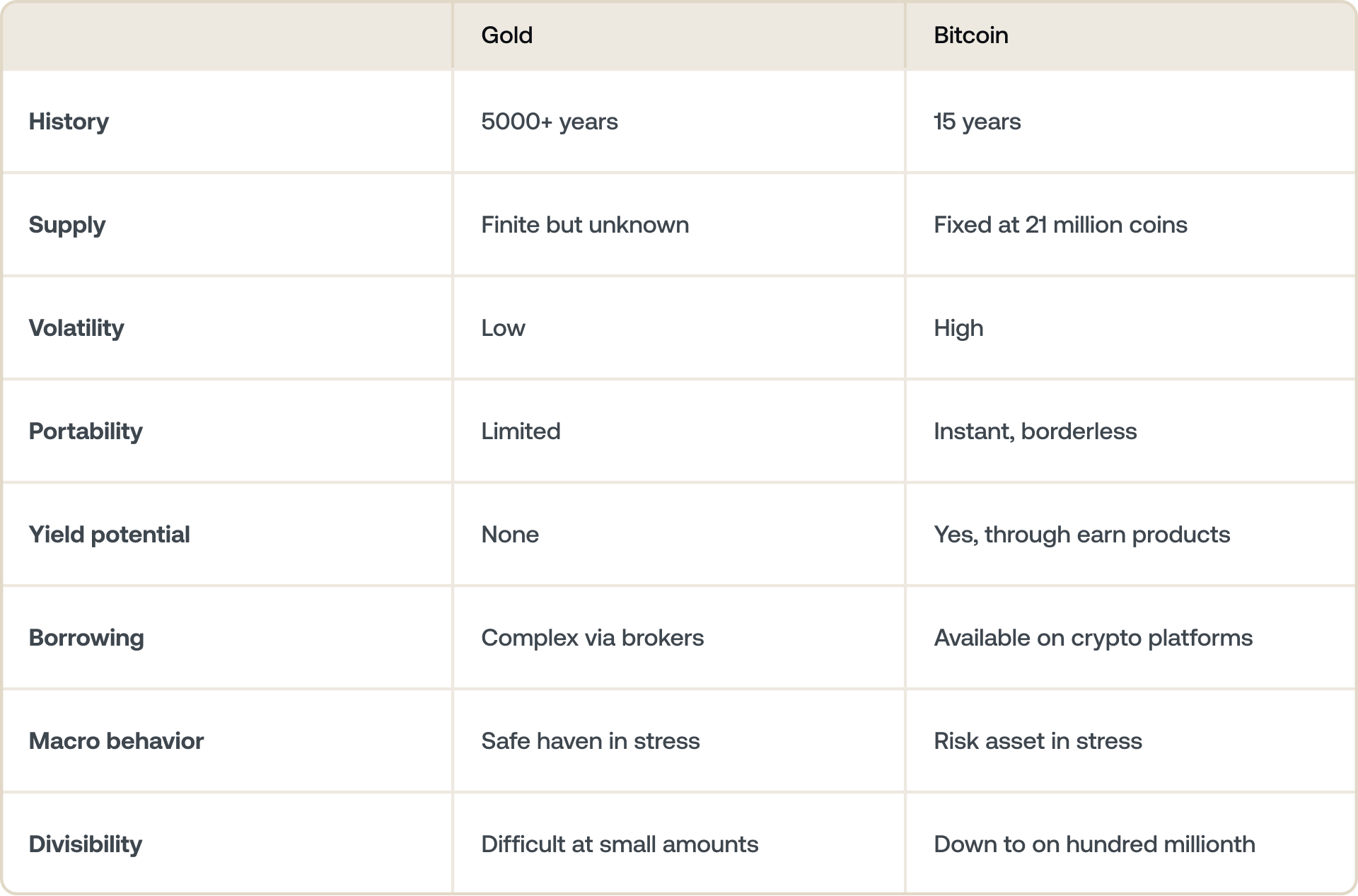
Тасымалдауға ыңғайлылығы мен бөліну қабілетіндегі айырмашылыққа жеткілікті мән берілмейді. 1 миллион долларлық Gold-ды тасымалдау физикалық логистиканы қажет етеді. 1 миллион долларлық Bitcoin-ді тасымалдау кез келген уақытта бірнеше минутты ғана алады.
«Немесе/немесе» деген таңдау неге мәселенің мәнін ашпайды?
Gold пен Bitcoin бір мақсат үшін бәсекелеспейді.
Gold — бұл дәлелденген, құбылмалылығы төмен негіз, яғни барлық басқа активтер қысымға ұшыраған кезде жақсы нәтиже көрсететін актив. Ол дүниежүзілік соғыстар, валюталық дағдарыстар және нарық құлдыраулары кезінде сыналған. Орталық банктер оны себепсіз сақтамайды.
Bitcoin — бұл сенімділігі жоғары, ұзақ мерзімді инвестиция, яғни өтімділік кеңейгенде, институционалдық қабылдау тереңдегенде және көп капитал цифрлық тапшылық портфельде орын алуға лайық деп шешкенде пайда көретін актив.
Екеуін де сақтау бір-біріне қайшы келмейді. Бұл әртүрлі активтердің әртүрлі уақыт кезеңдерінде әртүрлі мақсаттарға қызмет ететінін көрсетеді.
Бүгінде көптеген инвесторлар Gold-ды қорғаныс активі, ал Bitcoin-ді асимметриялық өсу позициясы ретінде қарастырады. Салыстырмалы үлесі толығымен жеке мақсаттар мен тәуекелге төзімділікке байланысты.
Активтеріңізді қалай тиімдірек жұмыс істетуге болады
Gold пен Bitcoin-ге қатысты пікірталастарда жиі ескерілмейтін бір айырмашылық — әр активті жай ғана сақтаудан басқа не істеуге болатыны.
Нақты Gold қоймада сақталады. Ол ешқандай табыс әкелмейді. Сатусыз немесе мамандандырылған брокерді тартпайынша, ол өтімділікті қамтамасыз етпейді.
Bitcoin және PAX Gold (PAXG) мен Tether Gold (XAUT) сияқты цифрлық Gold токендері — яғни ончейнде ұсынылған нақты Gold — басқаша жұмыс істей алады.
Nexo арқылы сіз:
- Bitcoin, PAXG және XAUT активтеріңіз үшін Икемді және Fixed-term Savings арқылы сыйақы алыңыз.
- Активтеріңізді сатпай-ақ, Nexo Credit Line арқылы активтеріңізді кепілге қойып, өтімділікке қол жеткізіңіз.
- Платформада Bitcoin мен токенделген Gold арасында тікелей сатып алып, айырбастаңыз.
Бұл Bitcoin мен Gold арасындағы таңдау екіұшты болмауы керек дегенді білдіреді, және қайсысын сақтасаңыз да, ол бос жатпауы керек.
Ескертпе: Мөлшерлемелер мен қолжетімді активтер сіздің юрисдикцияңызға байланысты өзгереді.
Жиі қойылатын сұрақтар
1. Bitcoin құндылық сақтау құралы ретінде Gold-дан артық па?
Бұл уақыт аралығы мен макроэкономикалық ортаға байланысты. Қысқа мерзімді күйзеліс кезеңдерінде Gold тарихи түрде жақсырақ нәтиже көрсеткен. Ұзағырақ уақыт аралығында Bitcoin едәуір жоғары кірістілік әкелді. Екеуі де нарық циклдеріне байланысты әртүрлі әрекет етеді. Олардың жұмыс істеу принциптері әртүрлі, сондықтан жеңімпазды таңдағаннан гөрі, олардың қалай жұмыс істейтінін түсінген пайдалырақ.
2. Неліктен 2025 жылы Gold Bitcoin-ден асып түсті?
Gold 2025 жылдың ерекше макроэкономикалық жағдайлары — геосаяси шиеленіс, орталық банктердің сатып алуы және доллардың әлсіреуі — аясында өркендеді. Тәуекелді актив сияқты әрекет етуге бейім Bitcoin күйзеліс кезеңдерінде акциялармен бірге сатылды. Бұл алшақтық екі активтің де негізгі болжамындағы өзгерісті емес, олардың нарықтағы әртүрлі мінез-құлқын көрсетеді.
3. Bitcoin мен Gold-ды бірге сақтауға бола ма?
Иә, көптеген инвесторлар солай істейді. Gold тұрақтылықты қамтамасыз етеді және қорғаныс активі ретінде өзін дәлелдеген. Bitcoin ұзақ мерзімді перспективада жоғары өсу әлеуетін ұсынады. Екеуін де сақтау тек біреуіне ғана сенім артудың орнына, әртүрлі макроэкономикалық режимдерге қатысуға мүмкіндік береді.
4. Цифрлық Gold дегеніміз не?
Цифрлық Gold — бұл PAX Gold (PAXG) және Tether Gold (XAUT) сияқты токендер, яғни қоймаларда сақталған нақты Gold-мен бірге-бір қамтамасыз етілген криптовалюталар. Олар Gold бағасының тұрақтылығын цифрлық активтердің тасымалдануымен және бағдарламалануымен біріктіреді.
5. Bitcoin-нің ұсынысы Gold сияқты тұрақты ма?
Bitcoin-нің кодына жазылған белгілі, өзгермейтін шегі бар — 21 миллион монета. Gold-дың ұсынысы шектеулі, бірақ белгісіз, себебі жаңа кен орындары әлі де табылып, өндірілуде. Bitcoin-нің ұсыныс кестесі ашығырақ және болжамды.
Бұл материалдар бүкіл әлемде қолжетімді және осы ақпараттың қолжетімділігі сипатталған қызметтерге қол жеткізуді білдірмейді, бұл қызметтер белгілі бір юрисдикцияларда қолжетімсіз болуы мүмкін. Бұл материалдар тек жалпы ақпараттық мақсаттарға арналған және қаржылық, заңгерлік, салықтық немесе инвестициялық кеңес, ұсыныс, сұрау, ұсыным немесе кез келген Nexo қызметтерін пайдалануды мақұлдау ретінде қарастырылмайды және жекелендірілмеген немесе қандай да бір жолмен нақты инвестициялық мақсаттарды, қаржылық жағдайды немесе қажеттіліктерді көрсету үшін бейімделмеген. Цифрлық активтер жоғары тәуекелге ұшырайды, соның ішінде нарық бағасының құбылмалы динамикасы, реттеушілік өзгерістер және технологиялық жетістіктер бар, бірақ олармен шектелмейді. Цифрлық активтердің өткен өнімділігі болашақ нәтижелердің сенімді көрсеткіші болып табылмайды. Цифрлық активтер ақша немесе заңды төлем құралы болып табылмайды, үкіметпен немесе орталық банкпен қамтамасыз етілмеген және көпшілігінің негізгі активтері, кіріс ағыны немесе басқа құндылық көзі жоқ. Жеке жағдайларға негізделген тәуелсіз шешім қабылдау керек және кез келген шешім қабылдамас бұрын білікті маманмен кеңесу ұсынылады.
Пайыздық мөлшерлемелер активке және Адалдық деңгейіне байланысты өзгереді және өзгертілуі мүмкін. «... дейін» сияқты терминдер шектеулерді білдіру үшін пайдаланылғанда, осы максималды немесе минималды шектерге жету барлық клиенттер үшін қолжетімді болмауы мүмкін қосымша әрекеттерге немесе белгілі бір критерийлер мен талаптарды орындауға байланысты болуы мүмкін. Сыйақы ала бастау үшін кейбір юрисдикцияларда орналасқан клиенттер өз Nexo шотында бұл қызметті алдын ала қосып (opt-in), келісім беруі керек.