Layer 1 vs Layer 2 crypto: qual é a diferença?
Apr 20•7 min read
Se você já usou cripto, certamente viu os termos Layer 1 e Layer 2 — frequentemente abreviados como L1 e L2. Eles aparecem em conversas sobre gas fees, Ethereum, Bitcoin e sobre por que algumas transações são rápidas e baratas enquanto outras parecem lentas e caras.
Não são tão complicados quanto parecem. Veja o que eles realmente significam, por que essa distinção importa e como as duas camadas funcionam juntas.
Resposta rápida
Layer 1 é a Blockchain base — a rede principal que registra e protege todas as transações (por exemplo, Ethereum, Bitcoin).
Layer 2 é uma rede separada construída sobre o Layer 1. Ela processa transações com mais rapidez e menor custo, depois consolida os resultados finais de volta no Layer 1.
Pense no Layer 1 como a infraestrutura de uma rodovia e no Layer 2 como as faixas expressas construídas sobre ela para reduzir o congestionamento.
O que é Layer 1?
Layer 1 é a Blockchain base — a rede subjacente que valida transações, mantém o livro-razão e aplica as regras. Quando você envia Bitcoin ou interage diretamente com um contrato inteligente do Ethereum, está usando o Layer 1.
Blockchains de Layer 1 conhecidas incluem:
- Ethereum — a base da maioria dos aplicativos DeFi, NFTs e contratos inteligentes
- Bitcoin — a Blockchain original, usada principalmente como reserva de valor e rede de pagamentos
- Solana e Avalanche — L1s alternativos criados para ser mais rápidos desde o início
As Blockchains de Layer 1 são autossuficientes em segurança. Suas redes de validadores (mineradores ou stakers, dependendo do mecanismo de consenso) confirmam cada transação e tornam a rede resistente a adulterações.
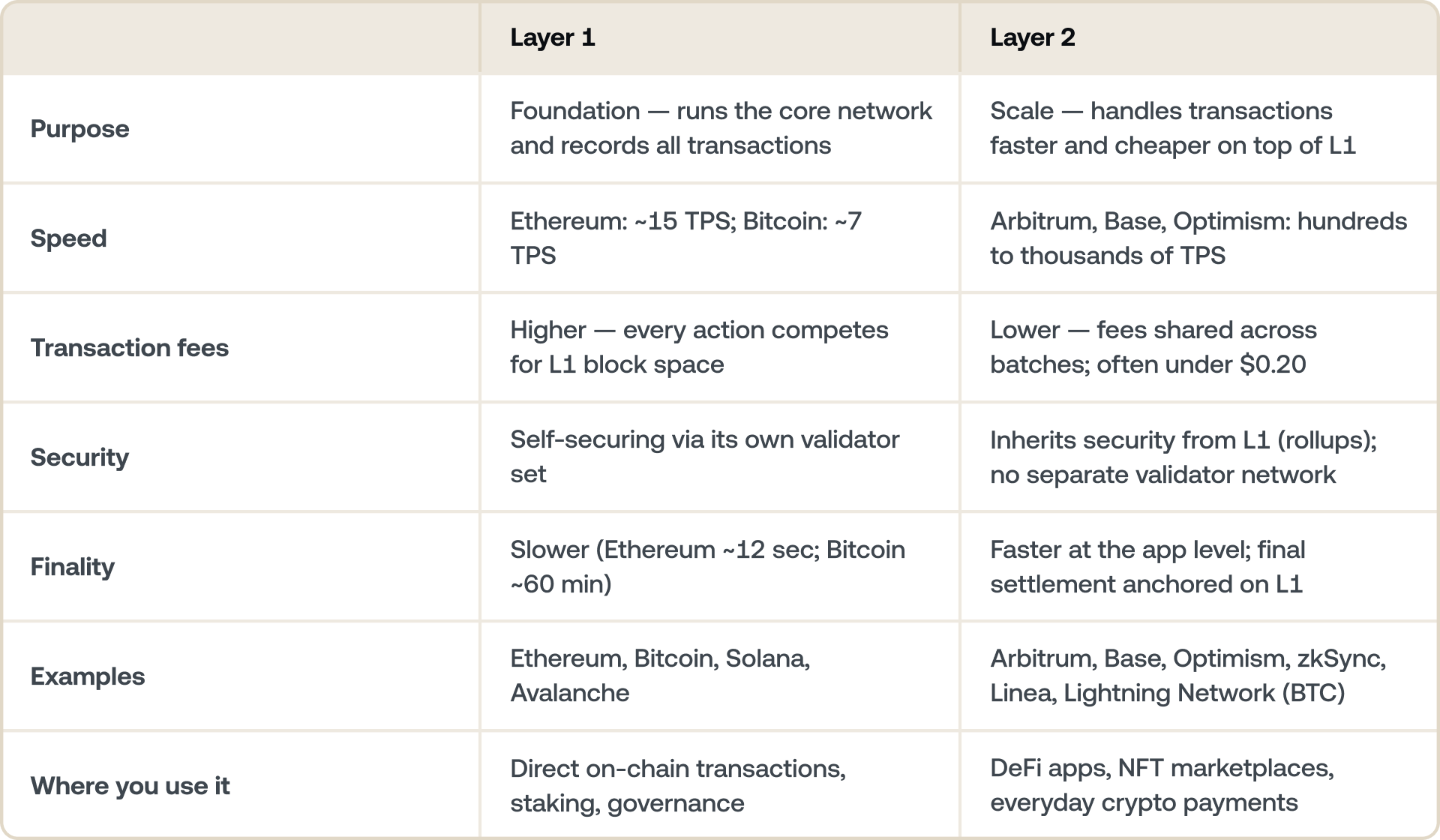
A contrapartida: como cada nó precisa processar cada transação para manter a segurança, as redes L1 têm capacidade de processamento limitada. O Ethereum processa cerca de 15 transações por segundo. O Bitcoin processa cerca de sete. Quando a demanda é alta, as taxas disparam e os tempos de confirmação aumentam.
O que é Layer 2?
Layer 2 é uma rede separada construída sobre uma Blockchain de Layer 1. Seu objetivo é processar transações fora da cadeia principal — com mais rapidez e menor custo — e depois reportar periodicamente os resultados ao Layer 1 para liquidação final.
O ponto principal: o Layer 2 não substitui o Layer 1. Ele usa o L1 como base de segurança. A cadeia base ainda é a fonte definitiva de verdade.
As redes de Layer 2 populares no Ethereum incluem Arbitrum, Optimism, Base (desenvolvido pela Coinbase), zkSync e Linea (desenvolvido pela Consensys). No Bitcoin, a Lightning Network desempenha um papel semelhante para pagamentos rápidos e de baixo custo.
Como o Layer 2 funciona?
A abordagem de Layer 2 mais comum hoje são os rollups. O nome explica a mecânica: as transações são "agrupadas" em lotes off-chain e apenas o resumo comprimido é publicado no Ethereum.
Em vez de pagar por cada transação individualmente na cadeia principal, você divide o custo de um lote com centenas ou milhares de outros usuários. É assim que as taxas do L2 podem cair para alguns centavos, mesmo quando as taxas da rede principal do Ethereum chegam a vários dólares.
Existem dois tipos principais de rollups:
Optimistic rollups
As transações são consideradas válidas por padrão. Qualquer pessoa pode contestar uma transação suspeita durante uma janela de disputa. Se nenhuma contestação for apresentada, o lote é aceito. Essa abordagem é mais simples de implementar e é usada pelo Arbitrum, Optimism e Base.
Zero-knowledge rollups (ZK-rollups)
Cada lote vem acompanhado de uma prova criptográfica — uma garantia matemática de que as transações são válidas — verificada no Ethereum antes de o lote ser aceito. ZK-rollups como zkSync e Linea oferecem finalidade mais rápida e garantias mais sólidas, embora sejam mais complexos de desenvolver.
Layer 1 vs Layer 2: comparação lado a lado
Por que essa distinção importa para você?
Na prática, a distinção entre Layer 1 e Layer 2 afeta três coisas que você encontra diretamente:
Taxas de transação
As taxas da rede principal do Ethereum podem variar de alguns dólares a dezenas de dólares quando a rede está congestionada. A mesma transação no Arbitrum ou Base normalmente custa bem menos de $0,20. Se você usa DeFi, faz trading ou envia cripto com frequência, essa diferença se acumula rapidamente.
Velocidade
As redes de Layer 2 confirmam transações em segundos no nível do aplicativo. A finalidade — o ponto em que uma transação se torna permanente — fica ancorada no Ethereum, mas você não vai notar esse atraso no uso diário.
Onde seus ativos realmente estão
Quando você move ativos para uma rede de Layer 2, eles não estão mais na rede principal do Ethereum. Estão em uma cadeia separada que eventualmente consolida os resultados de volta no Ethereum. A maioria das carteiras e aplicativos torna isso transparente, mas vale entender caso você precise solucionar problemas em uma transação ou escolher onde manter seus ativos.
A Nexo suporta mais de 100 ativos digitais — incluindo os principais L1s como Bitcoin, Ethereum e Solana, além de tokens nativos de L2 populares. Seja para ganhar sobre seus ativos mantidos, fazer empréstimo contra eles ou negociar entre ativos, tudo está disponível em um só lugar.
Algumas coisas que vale saber
O Layer 2 é uma melhoria real, mas traz algumas nuances:
- Mover ativos entre L1 e L2 usa uma bridge — um contrato inteligente que bloqueia os ativos em um lado e os libera no outro. As bridges foram alvo de alguns dos maiores ataques no universo cripto. Use sempre bridges bem estabelecidas e tome cuidado com as mais recentes.
- Nos optimistic rollups, sacar ativos de volta para a rede principal do Ethereum envolve uma janela de contestação — normalmente de cerca de sete dias. ZK-rollups e bridges centralizadas podem ser mais rápidos, mas trazem trade-offs diferentes.
- Com dezenas de L2s ativos, a liquidez e os aplicativos estão distribuídos entre várias cadeias. Nem todo aplicativo ou ativo está disponível em todas as redes.
- A tecnologia de Layer 2 evoluiu rapidamente, mas a maioria das redes ainda é mais recente do que a rede principal do Ethereum. A própria documentação do Ethereum observa que nenhum L2 é tão testado quanto o L1 ainda.
A conclusão
Layer 1 e Layer 2 não são ideias concorrentes — foram projetados para funcionar juntos. O Layer 1 fornece a segurança e a finalidade que tornam todo o sistema confiável. O Layer 2 o torna rápido e acessível o suficiente para o uso diário. Entender os dois oferece um panorama mais claro de como o ecossistema cripto é realmente construído e ajuda você a tomar decisões melhores sobre onde manter, mover e usar seus ativos.
Perguntas frequentes
1. O que é Layer 1 em cripto?
Layer 1 é a rede Blockchain base — a cadeia principal que registra e protege todas as transações. Ethereum e Bitcoin são os exemplos mais conhecidos. Cada transação que ocorre em um Layer 2 eventualmente é liquidada de volta em um Layer 1.
2. O que é Layer 2 em cripto?
Layer 2 é uma rede construída sobre uma Blockchain de Layer 1. Ela processa transações fora da cadeia principal para reduzir taxas e aumentar a velocidade, depois publica os resultados de volta no Layer 1 para liquidação. Exemplos incluem Arbitrum, Base, Optimism e zkSync no Ethereum, e a Lightning Network no Bitcoin.
3. Por que as taxas do Layer 2 custam menos?
As redes de Layer 2 agrupam centenas de transações e as enviam ao Ethereum como uma única entrada. A taxa do L1 é dividida entre todos no lote, então cada usuário paga uma fração do que pagaria por uma transação direta na rede principal.
4. O Layer 2 é tão seguro quanto o Layer 1?
As redes de Layer 2 baseadas em rollup herdam sua segurança do Ethereum — os dados subjacentes e a liquidação final ficam na cadeia principal. No entanto, a maioria dos L2s é mais recente e tem uma infraestrutura menos testada do que a própria rede principal do Ethereum. Vale fazer sua própria pesquisa antes de usar qualquer L2 para transações de grande valor.
5. Qual é a diferença entre um optimistic rollup e um ZK-rollup?
Optimistic rollups assumem que as transações são válidas e permitem um período de contestação para disputas. ZK-rollups geram uma prova criptográfica para cada lote, verificada no Ethereum antes da aceitação. Optimistic rollups são mais simples e amplamente adotados; ZK-rollups oferecem finalidade mais rápida e garantias matemáticas mais sólidas.
6. O Linea é um Layer 2?
Sim. Linea é um ZK-rollup desenvolvido pela Consensys — a equipe por trás do MetaMask e da plataforma para desenvolvedores Infura. Ele opera sobre o Ethereum, oferecendo taxas mais baixas e transações mais rápidas enquanto herda a segurança do Ethereum.
7. Preciso usar o Layer 2?
Não necessariamente. Se você mantém ativos a longo prazo sem transações frequentes, talvez nunca precise interagir diretamente com um Layer 2. Mas se você usa aplicativos DeFi, negocia com frequência ou quer reduzir taxas, as redes de Layer 2 oferecem uma experiência significativamente melhor do que operar diretamente na rede principal do Ethereum.
Estes materiais são acessíveis globalmente, e a disponibilidade destas informações não constitui acesso aos serviços descritos, que podem não estar disponíveis em determinadas jurisdições. Estes materiais têm caráter meramente informativo e não constituem aconselhamento financeiro, jurídico, tributário ou de investimentos, nem oferta, solicitação, recomendação ou endosso para usar quaisquer Serviços da Nexo, e não são personalizados nem de qualquer forma adaptados para refletir objetivos de investimento, situação financeira ou necessidades específicas. Ativos digitais estão sujeitos a um alto grau de risco, incluindo, mas não se limitando a, dinâmicas voláteis de preço de mercado, mudanças regulatórias e avanços tecnológicos. O desempenho passado de ativos digitais não é um indicador confiável de resultados futuros. Os ativos digitais não são dinheiro nem moeda de curso legal, não são garantidos pelo governo ou por um banco central, e a maioria não possui ativos subjacentes, fluxo de receita ou outra fonte de valor. O julgamento independente baseado em circunstâncias pessoais deve ser exercido, e a consulta a um profissional qualificado é recomendada antes de tomar qualquer decisão.