Markets Today - October 22, 2026
Oct 22•4 min read
.png)
Daily analysis of crypto markets and the forces shaping them, from the Nexo research desk.
Bitcoin rises to a one-week high near $83,500 as SpaceX and Super Micro earnings revive risk appetite, with oil near $110 capping gains
Bitcoin slides about 3% to near $82,000 on Thursday, its largest one-day drop in two weeks, as worries about the cost of the AI buildout trigger a global selloff in technology shares. U.S. futures point to a sharply lower open, with the Nasdaq-100 down 1.8%, the S&P 500 down 1.0% and the Dow down 0.6%, after the Kospi fell 3.5%, the Hang Seng 3% and the STOXX 600 about 1%. Tesla is down more than 5% premarket and Meta nearly 2% after mixed earnings, and chipmakers including Nvidia and Intel are lower. Treasuries are rallying, with the 10-year yield near 5.08%, the dollar index has slipped to 101.58, its weakest since October 1, and the yen is surging, with the dollar down 0.7% to 157.1. Brent is near $112, close to a five-month high, while gold is down 1.2% at $4,090. The main driver is financing, not demand: investors are looking past solid AI demand to who pays for the buildout, and with Treasury yields falling, the move reads as a growth and funding scare, not a rate shock. Bitcoin is trading with equities, not as a haven, as even gold is lower despite the flight to safety. The total crypto market cap sits around $2.7 trillion.
Bitcoin
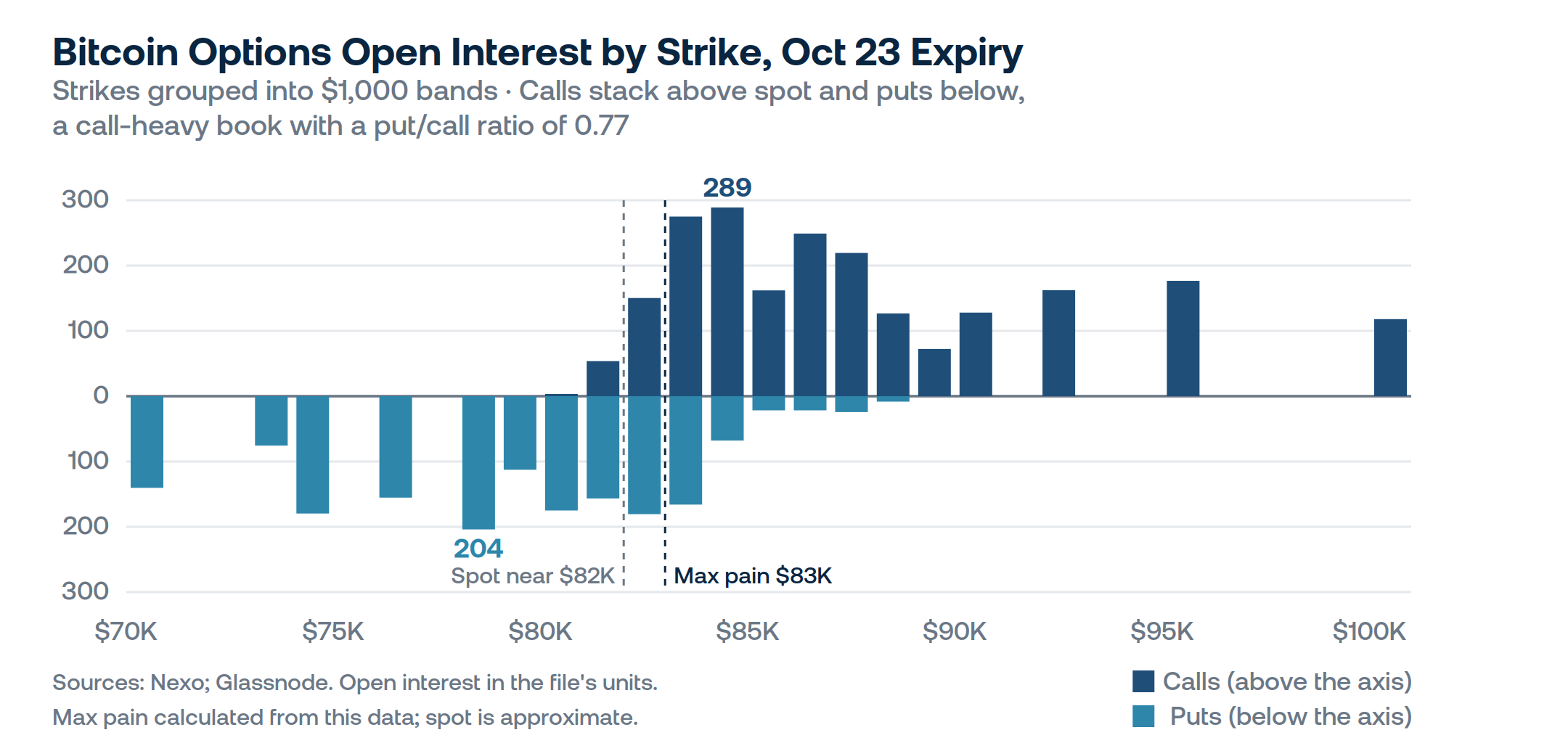
Bitcoin’s drop of as much as 2.9% since midnight UTC is the largest in two weeks. Derivatives suggest a move in price more than a change in positioning: trading volume jumped, but the dollar value of open interest fell roughly in line with price, which implies the number of open contracts barely changed, while funding rates are close to zero and implied volatility remains near its 2026 lows. Options show a hesitant mood, with $85,000 and $86,000 calls expiring October 30 the most traded on Deribit, but puts still costing more than calls at short maturities, a sign that traders are positioning for upside without removing protection.
ETF buying has returned, though at a slower rate than in past advances. The U.S. spot funds attracted more than $1.08 billion across the first three sessions of the week, per SoSoValue, yet their average since July 1 is only about $86 million a day, well below the $200 million-plus daily average during each of the three strong rallies since 2024. Days of $500 million or more have occurred about once in every 11 sessions since July, against about once in five during those rallies, and there has been no $1 billion day. With Bitcoin up 39% since July 1, other sources of demand, such as futures and direct spot buying, appear to have contributed.
Ethereum & Altcoins
Ether trades near $2,400 and Solana near $104, with smaller tokens falling by more than Bitcoin and decentralized-finance tokens the weakest. Solana’s Alpenglow upgrade was activated overnight without lifting the price. Across the altcoin market, positions are being unwound faster than prices are falling, which suggests leveraged longs are being closed and not held through the decline.
Macro & Institutional
Earnings are where that debate is playing out. Meta beat revenue estimates and guided to $73 billion to $76 billion for the quarter, but a plan for a new class of non-voting shares and capital spending of $135 billion to $145 billion revived questions about dilution and cost, and a $25 billion New Mexico privacy penalty added to the pressure. Tesla trimmed its capital spending plan to about $20 billion and its 2030 sales goal to 5 million vehicles, with net income down 4% on flat revenue. The Nikkei fell 2.4%, and ASML and other chip names led Europe lower.
Treasuries rallied as investors sought shelter, with the 10-year yield about 7 basis points lower and now below the French 10-year yield for the first time in 13 years, as French yields passed 5% for the first time since 2002 amid political unrest. The dollar’s slide reflects allocators trimming crowded exposure to U.S. tech and the dollar, according to one FX strategist. The yen led the gains after a Bank of Japan deputy governor signaled readiness to raise rates, though fears of intervention near 158 still limit the dollar’s rebounds. The euro holds near $1.12, down 0.8% this month, held back by France.
Brent is near $112 and WTI near $100 as tensions around Saudi Arabia escalated and reports of fresh military planning in the region raised supply concerns, and a larger-than-expected 3.1 million barrel draw in U.S. crude inventories added support. Gold also fell, as higher energy costs keep rate-hike expectations alive.
Looking Ahead
Today brings U.S. jobless claims, a quick read on the labor market, and earnings from Procter & Gamble, Honeywell, Blackstone and Spotify. Friday brings the U.S. flash PMIs and the University of Michigan consumer survey. Next week brings the Fed (October 27 to 28), ECB and Bank of Japan decisions, all expected to hold, with a Fed hike widely expected in December, followed by core PCE on October 29 and payrolls on November 6. For Bitcoin, the test is whether ETF inflows hold up if equities keep sliding, with $82,000 the level in play.
Author: Iliya Kalchev, Analyst at Nexo’s Dispatch
This material is produced by Nexo for informational purposes only and does not constitute financial, investment, legal, or tax advice, or a recommendation to transact in any digital asset. Views are the author's as of the date of publication and may change without notice. Information is from sources believed reliable, but Nexo makes no warranty as to its accuracy and accepts no liability for any loss arising from reliance on this material.